 The Honeycrumb
This post contains affiliate links. If you shop through them, Honeycrumb may earn a small commission at no cost to you.
What I Wish I'd Known About the First Week Home

Theo is six now, old enough that I have to really dig to remember the specifics of his first week home, but a few things come back whole and sharp whenever I let myself sit with it. The hospital hallway at 2 a.m. The way Pete's hands shook unbuckling the car seat in our driveway, like the ten-minute drive home had been the hardest thing either of us had done all day. The particular quality of light in our bedroom at 4 a.m., which I had never once noticed before and have now seen more times than I can count.
I've written practical posts on this blog about gear and budgets and the stuff you can plan for. This one isn't that. This is just what I remember, and what I wish someone had told me plainly instead of in the vague, reassuring way everyone talks to a very pregnant woman.
The hospital bag I packed wrong
I spent weeks researching what to pack for the hospital, and I got almost all of it wrong in small, forgivable ways. I packed a going-home outfit that didn't account for how much bigger my body still was after delivery. I packed nothing for Pete, who ended up wearing the same shirt for two days because he hadn't thought to bring a bag of his own. I didn't pack enough phone chargers, and we spent the second night passing one cord between three devices like it was the only resource left on earth.
None of it mattered, in the end. The hospital had what we actually needed, and the things I'd fretted over for weeks turned out to be the least important part of those two days.
Nobody tells you about the nights
Everyone tells you newborns don't sleep. What nobody tells you, specifically, is what it feels like at hour three of a night you can't remember the start of, holding a baby who won't settle, with a body that is still actively healing from delivery, and a brain that has not had uninterrupted sleep in what feels like a geological era. It's not just tired. It's a specific, disorienting kind of tired that makes you cry over things that wouldn't normally register — a dropped spoon, a text message, the dog barking.
I wish someone had told me that this particular flavor of exhaustion is temporary but real, and that it's not a sign you're doing anything wrong. It's just what the first few weeks cost, and it eases, even when it doesn't feel like it will.
The help I didn't ask for
My mom showed up on day four without calling first, let herself in with the spare key, and spent four hours doing our laundry and filling our fridge without asking me a single question about whether she should. At the time, in the fog of those days, I remember feeling a flash of something close to resentment — I hadn't asked for help, and some part of me wanted to prove I didn't need it. Looking back, it was one of the kindest things anyone did for us that month, and I didn't have the capacity in the moment to recognize it as anything other than an interruption.
I've thought about that a lot since. The help you need in the first week is rarely the help you'll think to ask for. It's someone doing the laundry without being asked, not someone offering to hold the baby so you can rest, which sounds nice but somehow never quite happens that way.
What actually got easier
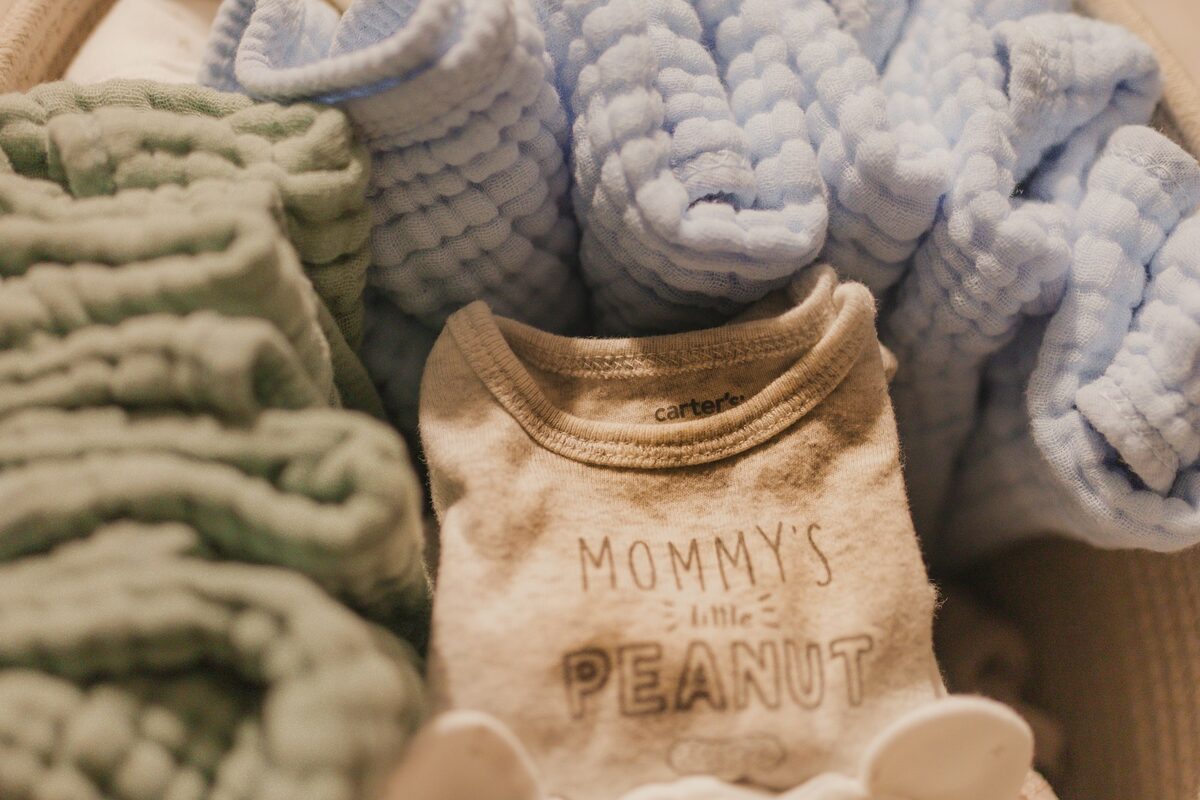
By the second week, something shifted, not dramatically, but noticeably. Feeding got less fraught. We figured out a version of a schedule, even a loose one. I stopped flinching every time he cried, because I'd started to recognize the different cries for what they were. None of it happened because we did anything particularly right. It just happened, the way most of early parenthood does, through repetition and time rather than through any strategy we came up with.
Pete and I also got better, slowly, at not narrating our own exhaustion to each other as if it were a competition. Early on, there was a real temptation to keep score — who'd slept less, who'd done more diaper changes overnight — and somewhere around week two we both quietly stopped, mostly because keeping score was making an already hard stretch feel worse for both of us. That shift mattered more to how the rest of that first month went than almost anything else we figured out.
What I'd tell a friend today
If a friend were about to bring her first baby home, I wouldn't tell her to pack differently or plan differently. I'd tell her that the first week is going to feel enormous and disorienting in ways that are hard to explain beforehand, and that it gets easier faster than it feels like it will in the moment. I'd tell her to let people do her laundry without asking. And I'd tell her that six years later, I still remember the quality of light in that bedroom at 4 a.m., and that somehow, impossibly, I miss it a little.