 The Honeycrumb
This post contains affiliate links. If you shop through them, Honeycrumb may earn a small commission at no cost to you.
Our Screen-Time Rules, and How They Broke

Before Theo was born, Pete and I had a lot of confident opinions about screen time. No screens before age two. No screens at the table, ever. No tablet as a default babysitter. We wrote these rules the way you write any rule before you've actually lived with the thing the rule is meant to govern — with total certainty and zero practical experience.
Six years and three kids later, I can tell you exactly which of those rules survived contact with real life, and which ones didn't make it past the first long car ride.
The rules we made before we had kids
Our original list, written with real sincerity on a notes app sometime during my first pregnancy: no screens before age two, strictly aligned with the recommendation we'd read. No screens during meals, under any circumstances. No tablet in the car, because we wanted road trips to be about conversation and looking out the window. One hour maximum on weekends once screens were introduced at all. We were, in hindsight, planning for a version of parenthood that existed mostly in our imaginations.
Where they held
The age-two rule actually held, more or less by accident, since Theo wasn't particularly interested in screens before then anyway. We've also mostly kept the no-screens-at-the-table rule, which matters to us enough that we've held the line even when it would be easier not to. Dinner, specifically, has stayed a no-device zone for six years running, and it's one of the few original rules I'm genuinely proud we kept.
Where they fell apart
The no-tablet-in-the-car rule lasted exactly one eight-hour drive to see my parents, during which Theo, then three, screamed intermittently for roughly five of those hours before we caved somewhere around hour two and handed him a tablet loaded with cartoons. It was, instantly and obviously, the right call, and I felt almost no guilt about it once the car went quiet. The one-hour weekend limit also dissolved pretty quickly once we had two, then three kids, and some weekends the honest number is closer to three hours, particularly on long winter afternoons when going outside isn't really an option.
I used to feel real shame about how far we'd drifted from our original plan. What changed that wasn't lowering my standards exactly, but realizing the plan itself had been built by two people with no actual experience parenting, and that experience taught us things the plan couldn't have accounted for.
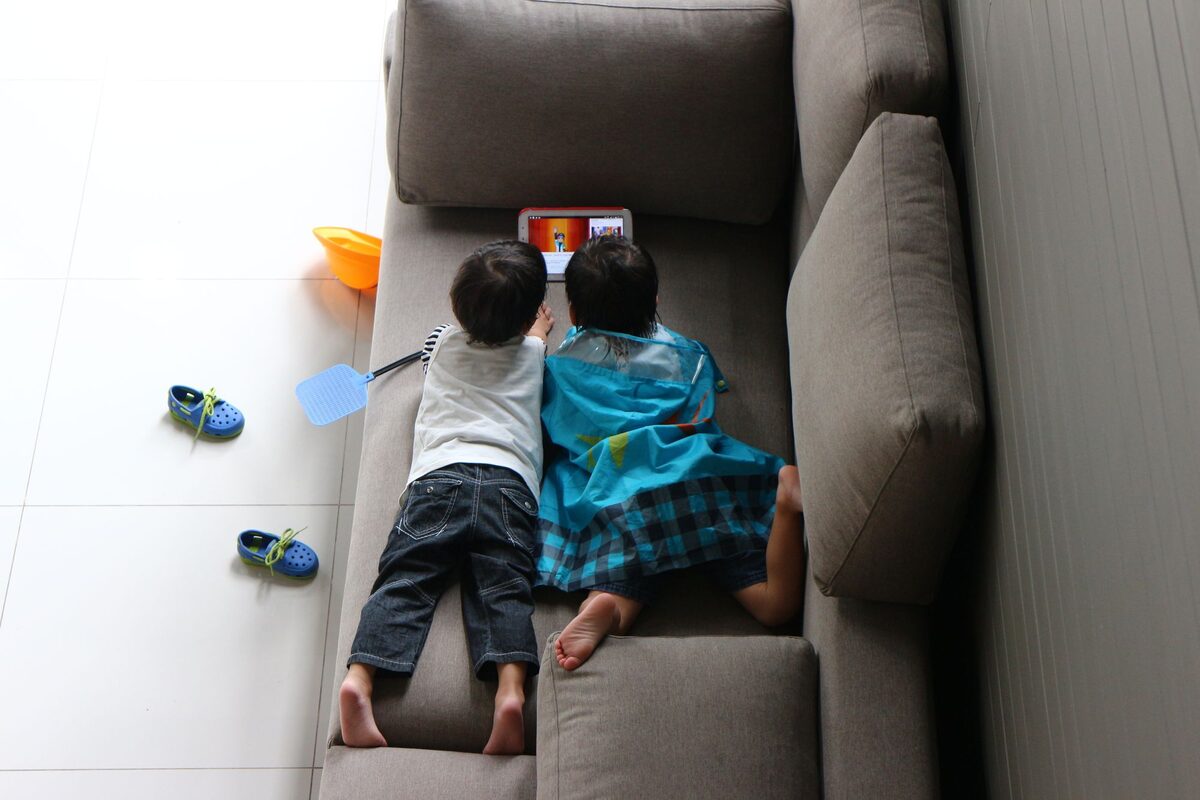
Where Theo, Birdie, and Sam fit into this differently
One thing we didn't anticipate when we wrote the original rules is that they'd need to flex differently for each kid. Theo, at six, has enough self-awareness now that we can give him a loose daily window and trust him to mostly self-regulate, with the occasional reminder. Birdie, at three, has no such self-regulation yet, so for her the limit is more about us physically ending the session and redirecting her, which is a completely different parenting job than the one we do with Theo. Sam, at nine months, isn't really in the screen-time conversation yet, though I notice he already turns his head toward the TV the second it's on, which tells me this conversation is coming for him faster than I'd like.
We also didn't anticipate how much the content itself would matter, separate from the time spent. A half hour of Theo building something in a creative app feels completely different to both of us than a half hour of passive cartoon watching, even though the clock reads the same. We've started paying more attention to that distinction than to the raw number of minutes, which wasn't part of our original thinking at all.
What we do now instead
Instead of a strict hours-based limit, we've shifted to something looser and, honestly, more sustainable: screens are fine for long car rides, sick days, and the specific stretch between 5 and 6 p.m. when I'm cooking dinner and genuinely cannot also referee three kids. Outside of those windows, we default to books, toys, or outside time, not because of a rule but because that's what they actually gravitate toward once the screen isn't an option. It's less a rule now and more a set of situations where we've decided the tradeoff is worth it.
We also stopped trying to enforce a single household rule and started thinking of it more like a rotating set of defaults that we adjust based on the week. A week with back-to-back activities and no downtime gets more screen time than a slow week at home, and I've made peace with that instead of treating every week as if it should look identical to the last one.
What I've stopped feeling guilty about
I've mostly stopped feeling guilty about the car rides and the sick days and the cooking-dinner window. What I haven't stopped feeling a little guilty about is how easily the weekend limit crept from one hour to three on certain days, mostly because I know that one was less about necessity and more about convenience. I don't have a tidy resolution for that one yet. I think most parenting rules end up somewhere between the plan you made and the life you're actually living, and ours have landed somewhere reasonable, even if it's nowhere close to that original notes app list.