 The Honeycrumb
This post contains affiliate links. If you shop through them, Honeycrumb may earn a small commission at no cost to you. I only link to things we actually bought and used. Thank you for supporting our little corner of the internet!
The Stroller We Bought for Baby Number Three (After Returning Two)
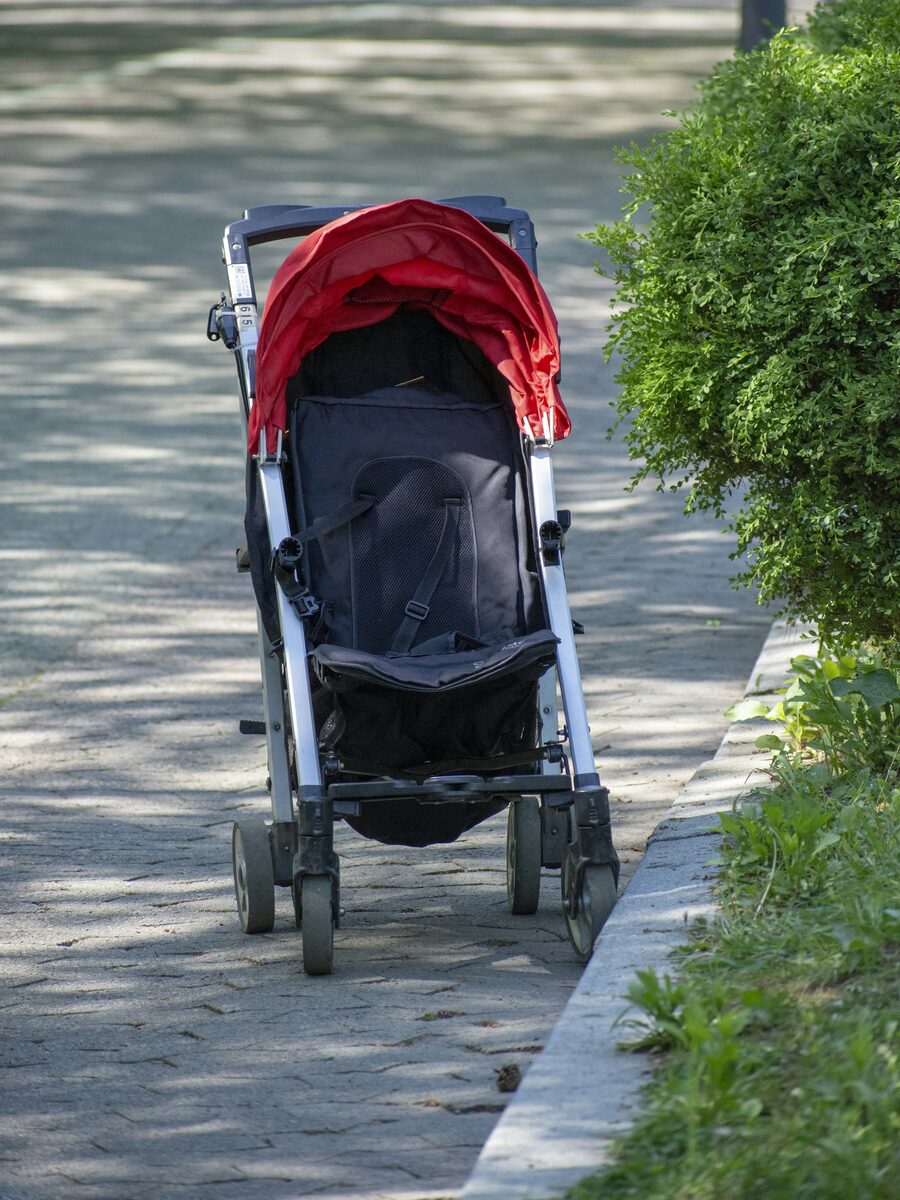
I want to be upfront about something before we get into model names and price tags: I am not a stroller person. I did not grow up dreaming about wheel bases or one-handed fold mechanisms. But three kids in, I have become someone who can talk about a recline angle with real feeling, and that is entirely because this particular purchase went so badly, twice, before it went right.
When Theo was born, we bought whatever was on sale at the baby store nearest our apartment. It was fine. It did the job a stroller is supposed to do. But by the time Birdie came along two and a half years later, we needed something that could hold two kids, and when I got pregnant with Sam last year, the math changed again. Three kids, two of whom can walk but don't always want to, meant we needed a stroller that could flex between a single seat, a double seat, and an infant car seat adapter — sometimes all in the same week.
Why our old stroller didn't make the cut
Our original stroller, a basic umbrella-style model we'd had since Theo was an infant, was never built to grow with us. It had no car seat compatibility, no second-seat attachment, and by the time Birdie was old enough to ride along, we were pushing her in a secondhand double stroller that squeaked so loudly my neighbor once asked if we needed oil for it. When we found out Sam was coming, I knew we needed to actually solve this instead of patching it together again.
I gave myself a budget of around $600 and a short list of requirements: it had to accept an infant car seat without a separate adapter purchase, it had to be able to seat two kids in some configuration, and it had to fit through a standard doorway, because our hallway is narrower than it has any right to be in a house built in the sixties.
Stroller #1: the UPPAbaby Vista V2 (and why we sent it back)
The Vista V2 is the stroller every parenting forum pushes you toward, and I understand why. It's beautifully built, the ride is smooth even on the cracked sidewalks near our house, and the bassinet attachment made it feel like a real option for newborn Sam. We paid $969.99 for the stroller itself, plus $99.99 for the RumbleSeat to convert it for a second child.
Here's where it fell apart for us: fully loaded with the bassinet and the second seat, it did not fit through our hallway. I measured twice before ordering and still got it wrong, because the spec sheet measures the frame, not the wheels at their widest point when the second seat is attached. We also found, three weeks in, that swapping between bassinet and toddler seat took longer than either of us had patience for on a weekday morning. We returned the whole set within UPPAbaby's return window and ate a small restocking fee, which still felt better than keeping something we were fighting with daily.
Stroller #2: the Bugaboo Fox 5 (so close, but no)
Round two was the Bugaboo Fox 5, at $1,399 for the base stroller. The fold is genuinely one of the best I've used — one motion, no bending down, no fighting with a release lever while holding a baby. The suspension is incredible on uneven ground, which matters more than I expected once Birdie started wanting to be pushed over every curb in the neighborhood at a dead run.
What didn't work was the price relative to what we actually needed it for. We weren't using this as a daily double stroller; most days it was one kid and one bag of groceries. Paying close to $1,400 for a stroller we'd use at that capacity, maybe twice a week, for a double setup, didn't make sense once I actually sat down and looked at our real usage instead of the "what if" scenarios I'd been shopping for. We returned it after about two weeks, this time with a little more clarity about what we were solving for.
What we actually needed, once we stopped shopping for the stroller we wanted
After two returns, I made myself write down what our actual week looks like instead of what I imagined it might look like. Most days: one stroller, one baby, maybe a toddler who climbs on and off the attached step. Occasionally: both younger kids, usually for a longer outing like the zoo or a weekend farmers market. Rarely: all three kids needing wheels at once, since Theo is old enough to walk or scooter alongside us now.
That meant we didn't need a true double stroller as our primary. We needed a strong single stroller with a car seat adapter for Sam, and an inexpensive, foldable second seat or standing board we could add only on the days we needed it.
The stroller we kept: the Nuna Demi Grow
We landed on the Nuna Demi Grow, which is built from the ground up as a convertible single-to-double. The base stroller runs $549.95, and it accepts the Nuna Pipa car seat line directly, no separate adapter needed, since we already had the Pipa RX from Birdie. It folds down to something that actually fits our hallway, with room to spare, and the standing platform for Birdie attaches and detaches in about ten seconds, which matters more than almost any other spec once you're doing it one-handed in a parking lot.
It isn't the smoothest ride of the three strollers we tried — that's still the Bugaboo, no contest — but it's good enough on our streets and sidewalks, and it does everything we actually need without asking us to pay for capability we weren't using.
Shop the Post
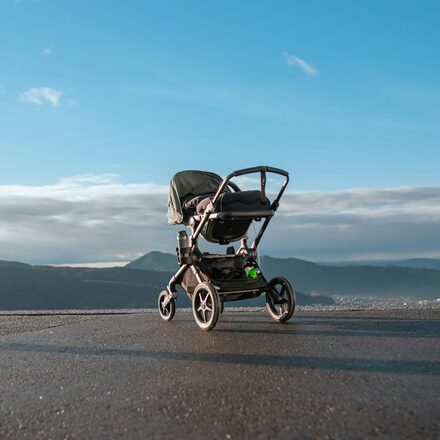

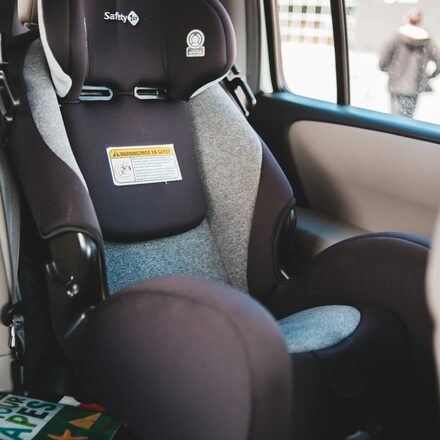
What it costs, start to finish
Adding it all up honestly, including the mistakes: we spent $1,069.98 on the Vista V2 and RumbleSeat before returning it, $1,399 on the Fox 5 before returning that too, and finally $549.95 on the Demi Grow, plus another roughly $150 in accessories we kept — the rain cover, a second car seat adapter, and a stroller caddy for bottles and snacks. Even with two returns, we came out of this spending less than the Fox 5 alone would have cost us, which is a strange kind of relief.
If you're stroller shopping with a toddler and a newborn
If I could save you our two returns, I'd tell you to write down your actual week before you shop for your imagined week. Measure your doorways and your trunk with the stroller fully loaded, not folded flat on a showroom floor. And don't be embarrassed to return something that isn't working after a real two or three weeks of use — most of the higher-end brands build in a generous return window specifically because they know this is a hard purchase to get right on the first try. We needed three tries. I'm glad we took them.